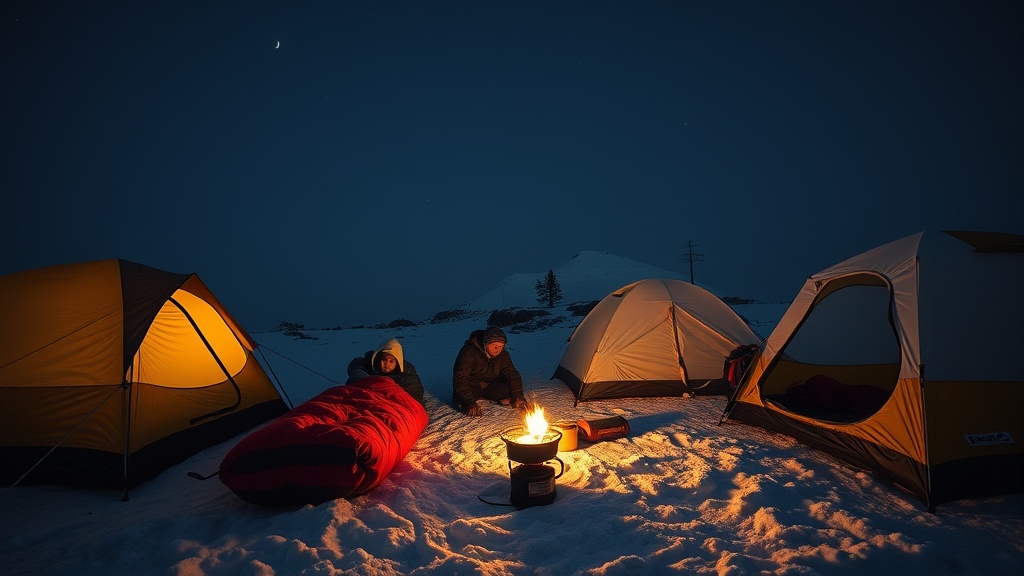
The biting chill of a mountain night can turn an otherwise perfect trip into a miserable ordeal. I’ve seen it happen. Your sleeping bag isn’t just a piece of gear; it’s your personal sanctuary against the elements, the difference between a restful night and shivering until dawn. For cold weather camping, selecting the right bag isn’t just about comfort—it’s about safety and enjoying the experience.
CampDeck is reader-supported. When you buy through links on our site, we may earn an affiliate commission. This helps us continue to provide quality, unbiased gear reviews. Rest assured, our recommendations are based on rigorous field testing, not advertiser influence. Our Amazon Associates tag is ‘campdeck-20’.
Understanding Cold Weather Sleeping Bags: More Than Just a Number
Phone cases · 15% off first order
Phone Case GiftThey pick the model · 2 minutes Code FIRST15GIFTWhen the mercury drops, your sleeping bag’s job becomes critically important. It needs to trap your body heat efficiently, protect against external cold, and manage moisture. But what makes one bag better than another for truly cold conditions? It’s a combination of insulation type, construction, fit, and shell materials.
The Myth of the Manufacturer Rating (and how CampDeck tests)
Every sleeping bag comes with a temperature rating, often a single number like “20°F” or “0°F.” This is a starting point, but it’s rarely the full story. Many manufacturers use the EN or ISO rating system, which provides a “comfort,” “limit,” and “extreme” rating. The “comfort” rating is what an average woman might find comfortable, while the “limit” is for an average man. The “extreme” rating is a survival temperature, not one you want to experience for hours.
Here at CampDeck, we take these numbers as suggestions. Our methodology involves taking every bag on a minimum of two real camping trips, often more, in conditions ranging from mild to genuinely harsh. We’ve set up tents in wind and rain, and our sleeping bags are rated against actual temperature performance, not just manufacturer claims. If a bag says 0°F, we want to see it perform comfortably for an average sleeper at or near that temperature, not just keep someone from succumbing to hypothermia. We factor in how easily it compresses, how it feels after a few nights, and how it stands up to real-world abuse.
Down vs. Synthetic: The Insulation Debate
This is often the first decision you’ll face. Both have their merits for cold weather.
-
Down Insulation: Made from the soft clusters found under the feathers of ducks or geese, down is incredibly warm for its weight and highly compressible. The “fill power” (e.g., 600-fill, 800-fill) indicates the quality and loftiness of the down—higher numbers mean more warmth for less weight. Down is excellent for dry, cold conditions. Its main drawback? It loses most of its insulating properties when wet. Hydrophobic down, treated to resist moisture, helps mitigate this, but it’s still not as reliable as synthetic in persistently damp environments. For serious cold, especially if you’re backpacking, down is often the top choice due to its superior warmth-to-weight ratio.
- Our Pick for Premium Down: The Western Mountaineering Versalite 10F sleeping bag consistently impresses us. It’s an investment, but the 850-fill-power down and meticulous construction mean it punches well above its weight in warmth and durability. It’s a bag you buy once and rely on for years in the backcountry.
-
Synthetic Insulation: Typically made from polyester fibers, synthetic insulation retains much of its warmth even when wet. It’s also generally less expensive and hypoallergenic. The trade-off is that synthetic bags are heavier and bulkier than their down counterparts for the same temperature rating. For car campers, families, or those camping in areas prone to dampness (like the Pacific Northwest in shoulder seasons), synthetic can be a very practical choice. Modern synthetic insulations like Primaloft or Climashield Apex have significantly improved in warmth, compressibility, and durability.
- Our Pick for Reliable Synthetic: The Marmot Trestles Elite Eco 0 Sleeping Bag is a go-to for many of our testers. It’s built with 100% recycled synthetic insulation, handles dampness well, and offers a comfortable night’s sleep down to its rated temperature without breaking the bank.
Shape and Fit: Mummies, Rectangles, and Semi-Rectangles
The shape of your sleeping bag directly impacts its warmth and comfort.
- Mummy Bags: These are tapered from the shoulders to the feet, conforming closely to your body. This minimizes internal air space that your body has to heat, making them the most thermally efficient. They are also lighter and more compressible due to less material. The downside is restricted movement, which some find uncomfortable.
- Rectangular Bags: Offering maximum room to sprawl out, rectangular bags are generally less thermally efficient as there’s more air to heat. They are often heavier and bulkier but are a favorite for car camping where weight and packed size aren’t critical.
- Semi-Rectangular (or “Relaxed Mummy”) Bags: A good compromise, these bags offer more room than a traditional mummy but are still more thermally efficient than a full rectangle. Many campers find them to be the sweet spot for comfort and warmth.
For true cold weather, a mummy or semi-rectangular bag is almost always preferred for its superior thermal efficiency.
Shell Materials and Features: What Keeps You Dry and Warm
The outer fabric of your sleeping bag needs to be durable, lightweight, and often water-resistant. Ripstop nylon or polyester are common choices. Look for a Durable Water Repellent (DWR) finish, which causes water to bead up and roll off, protecting the insulation inside.
Other features to consider:
- Draft Collar/Tube: An insulated tube or collar around the neck and along the zipper prevents warm air from escaping and cold air from entering. Crucial for cold weather.
- Hood: An adjustable, well-fitting hood is essential for trapping heat around your head.
- **Foot